
Responding to Trump's Tough Immigration Policies, L&E Practices Add Attorneys, Create Client Hotlines
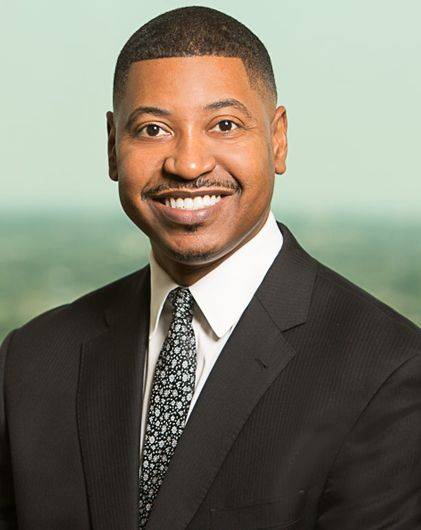
Phelps partner Brandon Davis was quoted in this article from the Daily Report.
Whether it’s orders changing visa requirements or heightened enforcement of existing labor laws, employers are not slowing their requests for legal assistance more than a year after President Donald Trump took office, some immigration and employment practice leaders say.
A major area of focus has been rules regarding noncitizen employees’ lawful status to work temporarily in the U.S., which the federal government has more aggressively enforced and added more requirements since Trump took office in January 2025.
Ted Chiappari, head of the immigration law group for Duane Morris, said demand has changed for its attorneys’ advice in the immigration space since a new administration took office in January 2025.
“There’s definitely been an increase in the demand for advice and counseling in areas that, before, clients were very comfortable with handling themselves,” Chiappari said. “Now, they’re a little gun-shy or they’ve had problems or issues that they didn’t have before, or they just read in the press.”
Labor and employment firm Fisher & Phillips had seen increased demand across all its practice areas—though especially in immigration employment since January 2025, said managing partner John Polson.
Polson, who is based near Los Angeles, said the firm established a 24-hour hotline for which lawyers would be available around the clock for clients’ immigration questions and “situations,” such as federal Immigration and Customs Enforcement raids on workplaces.
Fisher Phillips also saw a 25% increase in views in its website as its attorneys increased the number of “insights” they published about various changes to labor laws in 2025, Polson said.
One recent, major change that increased employers’ need for counsel has been a $100,000 fee on new petitions for H-1B visas for specialty professions requiring bachelor’s degrees. Despite the fee not affecting existing H-1B visa holders, employers had numerous questions about renewing or amending the document, some practice leaders said.
Trump signed an executive order in September to require the $100,000 fee for each application before the March 4-19 application window for the H-1B visa lottery. The fee was required if a potential employee does not already have a visa or requires consular or other special processing.
The program has a 65,000-visa cap and additional 20,000 visas for advanced degrees. The government changed the program Feb. 27 to a lottery weighted in favor of higher‑paid, higher‑skilled roles. Legislation introduced in Congress on March 17 would eliminate the fee on foreign workers specifically recruited to provide health care services in the U.S.
Phelps Dunbar partner Brandon Davis, who is based in New Orleans, said his firm dealt with increased demand as the federal government placed a “greater focus” on employers as they used federal programs to sponsor employees “who need visas in the employment-based space.” That led to a “much harder” hiring process—including increased costs for moving employees around the globe, he said.
Yet, Davis—whose practice focuses on employment of non-U.S. citizens in specialty occupations in the U.S. with the H-1B visa program—said “there’s still a lot of foreign investment flowing to the United States.”
“So, we still get calls all the time from foreign entrepreneurs [and] investors and foreign professionals in specialty occupations that want to come here,” he said.
In response to the increased demand, Phelps Dunbar hired a new associate and a new litigator for arguing immigration employment cases in federal court within one year, Davis said.
“We’ve had a handful of people that we’ve had to identify as a means of adding capacity to address the need that likely will be present for the next three years,” Davis said.
Between May and September 2025, Davis said he saw increased demand in industries related to technology, and in higher education in the areas of engineering, math and science.
Chiappari said his firm is anticipating demand to continue at its current pace but has not seen the need to add temporary lawyers to his group—which deals almost exclusively with H-1B visas. Most of the demand for his group’s work has come “advice and counseling and not petitions,” he said.
Other Visas
Trump signed an executive order on the first day of his term in January 2025 that included a requirement for evaluating “all visa programs” to ensure that foreign countries not use them to harm the U.S.
As a result, Phelps Dunbar received “immediate response” from the construction industry whose leaders in February and March 2025 said they needed to know how to use federal visa and other programs to hire foreign workers, Davis said.
Davis noted his firm saw increased demand from employers using the H-2A and H-2B visa programs to temporarily hire noncitizens for short-term needs such as seasonal agricultural work or work in industries like construction or hospitality when domestic workers are unavailable.
He said the firm even had increased demand for counsel on such scenarios as how U.S. citizens are taxed when working remotely from a foreign country for a multi-national company.
Davis said between April and October 2025 “the writing was on the wall” about enhanced enforcement from previous years. Phelps Dunbar began seeing increased demand for counsel on green card applications, Davis said.
“I think the attitude in the marketplace was, ‘If it’s much more difficult and much more costly to source labor through work permits and temporary programs, we may as well go for the gold anyway and get a green card,’” Davis said.
Processing of petitions for green cards to allow foreign citizens to remain indefinitely in the U.S. to live and work formerly took up to six months and now takes about two years, Davis said.